Sunday, September 9, 2007

Great White In Okinawa

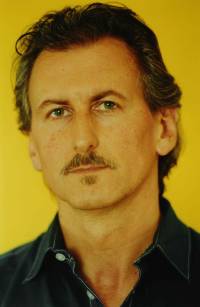
GERHARD GRUBER - silent film pianist


Gerhard Gruber in 1988 silent film accompanist at the piano. In countless performances, he has since been accompanied by the 400 films (Tokyo, Hobart, Bordeaux, Hamburg, Munich, Vienna and many others) and is considered the most important representative of his profession in Austria.

In 1988, for a short Chaplin - wanted silent film evening, a pianist. That it would incur Gerhard Gruber, a separate profession was not then in sight. His enthusiasm for this profession since then has been unbroken. "The feeling to be part of the action here was indescribable and has remained unchanged. This is also a guarantor of the vitality of the silent movie nights. It is never the film alone, it is always the Trinity Film - Music -. Audience, and so every evening, a private experience "

Gerhard Gruber's special access to the silent film accompaniment is improvisation, which he described as direct and always new dialogue with what is happening on the screen looks. This is not a performance of a movie right away, he loves to be seduced again and again by the films and to pass the seduction of the audience.

Meanwhile Gerhard Gruber played to about 400 silent films in countless performances . Especially since he joined in 1999 with the Austrian Film Archive, played for years at the Viennale and, in recent years in the Austrian. Filmmuseum was twice a guest the diagonal in Graz and the 2005 Cinéconcerts in Bordeaux and played in April 2006 and 2007 in Tokyo. Hobart in Australia was another destination. For schools in cooperation with the ÖKS (Christa Binder), he traveled throughout Austria (with the films "Metropolis", Fritz Lang and "The Freshman" / Harold Lloyd) and is always a welcome guest at cinemas and film clubs.


.


OF LANDSCAPES AND SCORES
An interview with Gerhard Gruber, Guest Impara l'Arte in 2008 in Padua
linked from "http://www.nonsolocinema.com/nsc_autore.php3?id_auteur = 181 "
Author: Marco Bellano
Published on Friday 22 February - NSC Year IV No. 10

One must really say, with relief and gratitude at last. Finally, for once, L'uomo con la macchina da is not presa ("The Man with the Camera") by Dziga Vertov excuse the mixed clashing, the electronic buzz, the frenzied repetition and all the other stereotypical synonyms for "avant garde" and "assembly line" to collect together the many silent-film composer when they deal with this film.
Those that moved the film and its brilliant formal study of the image is commented on, this time, however, a thoughtful and coherent Piano improvisation: a complex sound arc that begins with a hypnotic encounter in cyclical and diatonic melodies with long pedalisierten harmonies. The film, with its vibrant visual excitement, almost seems to be independent of the so calm and controlled, fine music. In fact, the eyes of the soloists are directed to fix the screen, and sight and hearing converge in secret, to tell in the middle of the show with their hidden natural and inevitable mutual dependence to. It is the so-called sequence Sinfonia delle mani (Symphony of the hands), the pretext for the turning point: from that moment the melodic figures of the piano virtuoso and the sound intensity Grow. Section and the rhythm of the music reinforce each other, while related major keys and give input in the acoustic flow short sun moments that are enhanced by a sporadic appearance of ironic elements.
Gerhard Gruber, born in 1951, the Austrian pianist, which is due to this interpretation of the work of Vertov. He specializes in jazz improvisation and is one of the most influential musicians active dealing with silent films. We have him on the 20th after the projection February 2008 made in Padua in the MPX theater in via Bonporti.
How have the images of "L'uomo con la macchina da presa" stimulates your improvisation? It is
not easy to explain. I believe that any improvisation must be based on the uniqueness of interpretation. Each frame gives me a wealth of sonic incentives: whenever the film is projected, I use another. Thus, the path between the images changed with each performance. I was born in a place that is characterized by elevations and hills. There we could see a beautiful panorama. But after a few steps, changed the landscape: the history of the area allowed to watch new and significant details. For me, the silent films as the landscape: Each of my interpretations is just one of many factors, can be estimated by you (the silent films). So I think that making music for silent films a bit like building a musical landscapes.
but also how to interpret a score ...
That is absolutely correct and very compatible with my thoughts. In fact, you can read a score in a variety of ways. Therefore, I always emphasize that the freedom of the musician's always the film is a child. It is true that sometimes tend the senses of the audience then, to find connections between image and sound, even if they do not exist. We must therefore pay not to ignore what is happening on screen. You have the right balance between independence, consistency and find contrast. Traditionally, Americans prefer the music in the film depending on the image, the Russians reversed.
Have you never thought to write scores for films with sound?
No, actually, my only productions outside of silent films that have something to do with the movies, some music series, which are suitable for general situations and character. For example: Music for a voltage scene for a funny scene ... I have done this work for a radio station that has made my compositions useful for different programs, as required. It is more or less what did the musicians at the time of the silent film, as the one Repertoire was composed for the pianist who had to accompany the movie in the theater. In Italy
obtained thanks to the Festival of Pordenone and Bologna of the interest in silent film music alive. Do you think that this area would like for the young graduates of the academies, pursue an alternative career in art, can provide a good opportunity? Leave
For the silent film or improvise for their own development, a valuable opportunity. No doubt the problem is mainly to acquire their own repertoire: movies, where it is possible to try out, there are thousands, but few have celebrated great success, repeatedly be projected. Therefore, it ends with only the same can be interpreted. It is to be like on a narrow path between two abysses hike, full of unseen treasures. Beyond these considerations, I would say that for a young musician who approaches the music for silent films, one would be very important: to forget oneself. That is to forget the academic rules and the obligations of classical composition to follow tonal pathways that are caused by the flow of images. And mainly you will have to forget your ego. Those who want to make this kind of music will have to be totally in the service of the film. Only in this way the end result is satisfying.

Stability In Z Transformation

about the silent film music by Gerhard Gruber

about the silent film music by Gerhard Gruber:

(of Alexander Horwath, director of the Austrian Film Museum, Vienna)

What is it: silent film music? And to what purpose should we run it today, 70 years after the last authentic, daily screenings of silent films? These questions are in the current cultural production numerous responses from the symphony orchestra (ie, high culture) of fun contrasting music (that irony-culture) up to the electronic score (ie contemporary interpretation). - In truth, however, most of these responses have little to do with the medium, the "reconstruct" they claim that they "revive" want. Naturally: Everything can be combined with all today, but this results in double-Everything Possible even make sense?

The music (accompaniment) to silent films today probably makes the most sense if it can resonate the fundamental openness and undecidability inherent in any rational reconstruction of a past practice. And above all: if music is the medium, at stake - the silent film - and not their own weight (or their own "importance", volume, or "brightness") buries. If they, on the contrary, those fragile dimensions the "bloom" silent film makes that have been spilled in the course of history and the changed perception often. This ideal will never be in all species and all the works to implement the silent film (in this case is allowed to be better and the music shows the best approximation: the silent movie just as silent film). And where it is - seen from the film - can be done, you need a real musical partner of the film.

The Austrian composer and (improvisation) Musician Gerhard Gruber is one of very, very few representatives of the profession that this seemingly modest, actually but meet the highest requirements. He is the partner par excellence. The special fact that in the silent music of a partial "dead" (ie stored old and on celluloid) and the other part "alive" (that live there and act) is required, paradoxically, by a musician who is now using that fact (ie with their own "advantage") are not satisfied that the "dead" part would have as lively as he himself is.

Gruber form of modesty is also his greatness, for it takes size to give way to a creative and imaginative musician a "foreign text." This is similar to the relationship between a great director (film) and a great actor (musician). In both because such an approach is of course far beyond "servility": This does not cover someone's routine services (such as the many other silent film music, the same old nostalgic childhood "Klimper rug" wide on every conceivable film). Here, instead, begin a productive conversation - beyond words. As the great actor in a subtle, non-verbal and very moving way the director is making steady new offers and free will, as more and more layers of the director's concept, then Gerhard Gruber relation to each film - regardless whether it is to slapstick comedy, a historical Epic, melodrama, psychological chamber drama or is an adventure film.

Gruber's biographical background as a jazz musician, as an improviser in the same game, for these different qualities most important. It needs a rich palette and also the ability to rapidly, possibly non-trivial response to a wide range of film work as diverse respond. Silent film music in the sense Gruber is neither an exaggeration of the film, nor the "Verdaulichmachung" of an "old fashioned" artifact, not a vanity or a simplification of the existing plant. It is always a partnership proposal, in a partnership, guaranteed never gets boring. An "open relationship" including intimate relationship of trust.


********************************************

Am Mad Dog Biting Myself Sympathy Pdf

Ilse Aichinger Gerhard Gruber

interview Ilse Aichinger:


The following article by Ilse Aichinger about the silent-film pianist Gerhard Gruber appeared in October 2006 in her book "subtexts" (published correspondence) and in book "movie without a country" (No place for a cinema) by Almut Rink and Ruth Kaaserer (Czernin Verlag):


THE FILM EDUCATOR
Neither he wears a Viennese Order, nor shall the Town Hall for excitement and speculations such as Michael Jackson. Gerhard Gruber, composer and musician (the piano player, "his name for me) comes from the barren landscape of the Mühlviertel. He improvises on the piano to silent movies, in the triangle, which also I move often: between metro cinema, Breitenseer light shows and film museum - not Bermuda, but the safest place to disappear.

He makes every movie possible, and it also unnecessarily. Who sees his hands on the illuminated buttons, you can risk it, forget Chaplin himself to his aufzuhelfen memory of him. Should we ask for self-forgotten, how much you have to forget them? Gerhard Gruber is not relevant. Composing is an intellectual act, he explains, improvisation, an act of love. "It would not surprise me if my game changed the film." Whether he knows how much the pictures is lost as the movie dialogue to sign a "Petition against the talkies" would?

"Gruber is a form of modesty at the same time its size," says Alexander Horwath (Austrian Film Museum). "The special fact that in the silent music of a piece of dead '(ie old and stored on film) and the other part, alive '(that live there and act) is required, paradoxically, by a musician who is now using that fact (ie the own advantage ") are not satisfied that the' dead 'part would have just as alive as he is himself. "

to" I'm not from the air, but I do not know what to do with it, "EM Cioran. But who Gerhard Gruber hear piano notes, is once again ready his breathing to be trusted. "We go through the fields and look forward," Adalbert Stifter wrote (how long before the night in which he cut with a razor to his throat, would certainly find out). "The man can be very happy, "says the founder of Urban Monograph Riedl -. and that leads back to the donor-Fan Gerhard Gruber

The question of the" subtext "of a person moving in contrary and yet Founder and Gruber together with Gerhard Gruber lucky should by itself and, if he wants to share this happiness for a long time He knows that destroying the primeval when it came to light pulls,... that you kill what is demystified If the "Skwaraismus" (that of Erich Wolfgang Skwara Martin Walser) is the passion that makes their unsatisfiability program, "said Gerhard Gruber is the incarnate antithesis to this definition.

too hard to bear for the soft states, which, for example, after the movie "The Avalanche", a by Gerhard Gruber "maladjusted movie, go home or go somewhere else. (Wear some movies, of course, he said, others must be "pulled". But it is for the educator and the like, which he does not like.) "On the night continue to run the silent movies. I dream in silent film, blue tinted. " And "The guy next door from the grave" (now at 18 clock in the cine-film)? He should get out there and put together quickly with other Scheintodgefährdeten Breitensee according to Gerhard Gruber.

(courtesy of Autorin)

****


ENGLISH VERSION:

Blue-Toned Silent Film Dreams

He doesn’t wear a Viennese medal of honor, nor does he create a commotion in the parliament and cause guessing games like Michael Jackson. Gerhard Gruber, composer and musician (“the piano player” as I know him), comes from the barren landscape of
the Muehlviertel. He improvises on the piano to the silent films in the triangle that I often move in: between the Metro-Kino, the Breitenseer Lichtspiele, and the Filmmuseum—not Bermuda, but still a place where you can safely disappear.
He is the one who first makes each film possible and, at the same time, unnecessary. Those who have seen his hands move on the illuminated keys might even risk forgetting Chaplin to boost their memory of him. In letting yourself go, should you ask how much you have to let go? For Gerhard Gruber that isn’t relevant. Composing is an intellectual act. As he explains, improvisation is an act of love. “It wouldn’t surprise me if my playing changed the film.” And would this man—someone who knows how much the pictures have lost through dialogue cinema—sign a “petition against the talkies”?
“Gruber’s form of modesty is likewise his greatness,” said Alexander Horwath (of the Austrian Filmmuseum). “The particular situation of silent film music, in which one part is ‘dead’ (which means old and stored on celluloid) and the other part ‘living’ (alive and capable of acting), paradoxically demands a musician who is not satisfied with this situation (with his or her own ‘advantage’), who wants to make the ‘dead’ part just as much alive as he or she is.”
“I am still breathing the air, but I don’t know what I should do with it,” stated E. M. Cioran. Those who listen to Gerhard Gruber play the piano can once again trust their own breath.

...

And Der Typ vom Grab nebenan (The guy in the next grave) (today at 6 p.m. in Cine-Kino)? You should help him out of there and quickly bring him, together with the others in danger of apparent death, to Breitensee, to Gerhard Gruber.

First published in: Die Presse, 12 March 2005, as “Der Filmerzieher.”
Translated by Lisa Rosenblatt.


World Record For Endocrine Disorder

DATES Gerhard Gruber


PROGRAM:

silent movie theater in Vienna Breitenseer
14th September 2007 - 6 January 2008


***


LAUREL & HARDY shorts
May 9, 2007 (Kiwanis Lienz)

QUEEN KELLY May 12, 2007 (gardening Theater Wien)
FOOLISH WIVES 16.Mai 2007 (Metrokino Wien)
THE SOCIAL SECRETARY 17.Mai 2007 (Metrokino Wien)

T HE UNBELIEVER 19.Mai 2007 (Metrokino Wien)
THE WEDDING MARCH 19.Mai 2007 (Metrokino Wien)
BLIND HUSBANDS 20.Mai 2007 (Metrokino Wien)
THE SOCIAL SECRETARY 21.Mai 2007 (Metrokino Wien)
THE HEART OF HUMANITY 21.Mai 2007
(Metrokino Wien)
THE UNBELIEVER 23.Mai 2007
(Metrokino Wien)
OLD HEIDELBERG 27.Mai 2007
(Metrokino Wien)
QUENN KELLY 27.Mai 2007
(Metrokino Wien)
THE GENERAL 31.Mai 2007 (Forum Neuhofen/ Krems)

OLD HEIDELBERG 1.Juni 2007
(Metrokino Wien)
THE HEART OF HUMANITY 1.Juni 2007
(Metrokino Wien)
FOOLISH WIVES 2.Juni 2007
(Metrokino Wien)
BLIND HUSBANDS 3.Juni 2007
(Metrokino Wien)
ROSALIE ET SES MEUBLES FIDÈLES 8.Juni 2007 (Österr.Filmmuseum)
LÉONTINE GARDE LA MAISON 8.Juni 2007 (Österr.Filmmuseum)
ENGELEIN 8.Juni 2007 (Österr.Filmmuseum)
HIS PICTURE IN THE PAPER 9.Juni 2007
(Metrokino Wien)
MERRY-GO-ROUND 9.Juni 2007
(Metrokino Wien)
THE MERRY WIDOW 10.Juni 2007
(Metrokino Wien)
Assunta Spina 15.Juni 2007 (Österr.Filmmuseum)
GREED 16.Juni 2007
(Metrokino Wien)
THE MERRY WIDOW 16.Juni 2007
(Metrokino Wien)
THE HUN WITHIN 17.Juni 2007
(Metrokino Wien)
MERRY-GO-ROUND 17.Juni 2007
(Metrokino Wien)
FLOWER OF EVIL 22.Juni 2007 (Österr.Filmmuseum)
THE PROFILE Jun 22, 2007 (Österr.Filmmuseum)
THE VICTORY OF THE HOSE ROCKS Jun 22, 2007 (Österr.Filmmuseum)

WITHIN THE HUN Jun 23, 2007 (Metro Kino Wien)
THE MERRY WIDOW
Jun 23, 2007 (Metro Kino Wien)
HIS PICTURE IN THE PAPER
Jun 24, 2007 (Metro Kino Wien)
GREED
Jun 24, 2007 (Metro Kino Wien)
LAUREL & HARDY SHORT FILMS Jun 28, 2007 (Tegernbach court stage, O.Ö.)
KINGS OF COMEDY 5th-15th July 2007 (New Stage Villach)
A PAGE OF MADNESS 24.Juli 2007 (Film Festival Motovun, Croatia)
CAFE Elektric 3.August 2007 (Filmhof Asparn / Zaya)
Nosferatu 8.September 2007 (Waldviertler Stummfilmfest 2007-2011, Vitis)
CAFE Elektric 3.Oktober 2007
(Waldviertler Stummfilmfest 2007-2011, Vitis)
LAUREL & HARDY 21.Oktober 2007
(Waldviertler Stummfilmfest 2007-2011, Vitis)
ORLACS HAPPENED 14th September 2007 (Breitenseer Lichtspiele Vienna)
Nanook of the North 11.November 2007 (Movie Casino Wien)

***********
____________________________________________________


Gerhard Gruber is an Austrian composer and piano player. As accompanist for silent movies he has become the leading authority in Austria since 1988.
He has performed for about 380 different films (Viennale 1999-2004, Tokyo 2006, Cineconcerts Bordeaux 2005, Diagonale).

***

As a basic principle he appreciates improvisation for his work, which he regards as best way of a direct and always new dialogue between the events on the screen, the music and the audience. So no performance resembles the others. Gerhard Gruber likes it to be enticed by the films again and again and to pass on these feelings to the audience.

***

ALEXANDER HORWATH, director of the Austrian Filmmuseum, about Gerhard Grubers music for silent movies:

... Music for silent movies needs a genuine musical partner of the film. The Austrian composer and (improvisation) musician Gerhard Gruber is one of very much, very few representatives of the profession, who meets this only apparently modest, actually however highest requirement. He is the partner par excellence.

Silent movie music in the sense Grubers is neither an exaggeration of the film, nor the “digestible making” of an “old-fashionable” artifact, neither a vanity nor another simplification of the existing work. It is always a partnership suggestion; in a partnership, which becomes never boring as it is guaranteed. An “open relationship” including intimate bond of trust.

***

www.stummfilm.at


All Performance 2006

city without Jews
Date: Wednesday, 04
January 2006 Location: Metro Kino Wien


Phil Jutzi - Retrospective
Date: Wednesday, 08 February 2006 - Tuesday 28 February 2006
Location: Metro Cinema, Vienna

Storm over Asia, October, Battleship Potemkin, Mother Krause's Journey to Happiness, The death
bark, earth and many

General
Date: Sunday, 19 February 2006, 11:00
Location: City Cinema Hainfeld (A-3170 Hainfeld)

"Sex is Cinema" - Retro
Date: 10-Mar 30, 2006

Austria-Japan Silent Movie Event
Date: Sunday, 16 April 2006 - Saturday 22
April 2006 Location: Tokyo, Japan

films on Freud Siegfried
Date: Thursday, 27 April 2006 - Saturday 29 April 2006
Location: Metro Kino Wien

The following films will be shown:
"narcotics", "Secrets of a Soul," "The Student of Prague", "The Cabinet of Dr. Caligari"

General
Date: Wednesday, 10. May 2006
Location: City Cinema Lienz

Konec St.Petersburga
Date: Friday, 19
May 2006 Location: Vienna Film Museum

Aelita
Date: Sunday, 21
May 2006 Location: Vienna Film Museum

Schachmatnaja Gorjatschka / Neo bytschanjye V.
pm Date: Saturday, 27
May 2006 Location: Vienna Film Museum

Shinel
Date: Sunday, 28
May 2006 Location: Vienna Film Museum

People on Sunday
Date: Tuesday 30 May 2006

film in a Billy Wilder retrospective.

People on Sunday
Date: Sunday, 04 June 2006

film Billy Wilder in a retrospective.

Horror Freaks &
Date: Tuesday 06 June 2006 - Monday 31 July 2006
Location: Prater Film Festival, Vienna

The Devil Reporter (In the fog of the city)
Date: Tuesday 13 June 2006
Location: Metro Kino Wien

film in a Billy Wilder retrospective. Director: Ernst Laemmle

Orlac's hands
Date: Thursday, 06 July 2006, 21:30
Location: Kaiser meadow in the Prater, Vienna

Austrian Empire in 1924, directed by Robert Wiene, Actor: Conrad Veidt, Alexandra Sorina,
Fritz Kortner, Fritz Straßny, Paul Askonas, Carmen Cartellieri

live music accompaniment by Gerhard Gruber, PeterRosmanith and AdulaIbn Quadr

Nosferatu Symphony of Horror
Date: Friday, 21 July 2006, 21:30
Location: Kaiser meadow in the Prater, Vienna

Germany 1922, directed by Murnau silent film in

Filmhof
Date: Monday 24 July 2006
Location: Filmhof Asparn / Zaya, Austria

silent film in Filmhof
Date: Monday, 31 July 2006
Location: Filmhof Asparn / Zaya, Austria

silent film in Filmhof
Date: Monday 07 August 2006
Location: Filmhof Asparn / Zaya, Austria

General
Date: Tuesday 08 August 2006
Location: Pürbach / Lower Austria, Waldviertel Court Theatre

Safety last time: Sunday 20 August 2006
Location: Court Theatre Tegernbach, Schlüßlberg

Harold Lloyd, accompanied by Gerhard Gruber

The Freshman
Date: Sunday, 27. August 2006
Location: Court Theatre Tegernbach, Schlüßlberg

Nosferatu
Date: Thursday 07 September 2006
Location: Hard, Vorarlberg.

music accompaniment by Gerhard Gruber and "The Silent movers

The general line
Date: Friday 08 September 2006
Location: Walser valley, Vorarlberg

Walser fall, accompanied by music by Gerhard Gruber and "The Silent movers

Nosferatu
Date: Wednesday, 25 October 2006
Location: Culturcentrum Selva Stainach

The Little Rascals
Date: Wednesday, 25 October 2006
Location: Culturcentrum Selva Stainach

A Girl in Every Port
Date: Saturday 04 November 2006
Location: Metro Kino Wien

With Louise Brooks, accompanied by music by Gerhard Gruber

Pandora's Box
Date: Saturday 04 November 2006
Location: Metro Kino Wien

With Louise Brooks, accompanied by music by Gerhard Gruber

Diary of a Lost
Date: Sunday, 05 November 2006
Location: Metro Kino Wien

With Louise Brooks, accompanied by music by Gerhard Gruber

It's the golden army game
Date: Monday 06 November 2006
Location: Metro Kino Wien

Love'em and Leave'em
Date: Tuesday, 07. November 2006
Location: Metro Kino Wien

Safety last!
Date: Wednesday, 08 November 2006
City: Film Club Wieselburg

The Show-Off
Date: Thursday, 09 November 2006
Location: Metro Kino Wien

Diary of a Lost
Date: Friday, 10 November 2006
Location: Metro Kino Wien

Pandora's Box
Date: Saturday, 11 November 2006
Location: Metro Kino Wien

A Girl in Every Port
Date: Monday, 13 November 2006
Location: Metro Kino Wien

Beggars of Life
Date: Wednesday, 15 November 2006
Location: Metro Kino Wien

The Show-Off
Date: Thursday, 16 November 2006
Location: Metro Kino Wien

Pandora's Box
Date: Thursday, 16 November 2006
Location: Metro Kino Wien

It's the golden army game
Date: Friday, 17 November 2006
Location: Metro Kino Wien

Earth Spirit
Date: Sunday, 19 November 2006
Location: Metro Kino Wien

Love'em and Leave'em
Date: Monday, 20 November 2006
Location: Metro Kino Wien

Beggars of Life
Date: Tuesday 21 November 2006
Location: Metro Kino Wien

Sur un air de Charleston
Date: Friday, 01. December 2006
Location: Austrian Film Museum, Vienna

La Fille de l'eau
Date: Friday, 01 December 2006
Location: Austrian Film Museum, Vienna

Tire au FLANC
Date: Saturday, 02 December 2006
Location: Austrian Film Museum, Vienna

Une vie sans joie (Catherine)
Date: Saturday, 02 December 2006
Location: Austrian Film Museum, Vienna

Nana
Date: Sunday, 03 December 2006
Location: Austrian Film Museum, Vienna

Fraulein Else
Date: Thursday 07 December 2006, 18:30
Location: Metro Kino Wien
The young
Medardus
Date: Thursday 07 December 2006, 20:30
Location: Metro Kino Wien

Fraulein Else
Date: Friday 08 December 2006, 20:30
Location: Metro Kino Wien

The young Medardus
Date: Friday 08 December 2006, 20:30
Location: Metro Kino Wien